

If the federal government paid compensation to others for the end of slavery, for failure to be protected from lynching, for economic exploitation, and for mass incarceration, Then why not Black Americans who experienced each one?

“
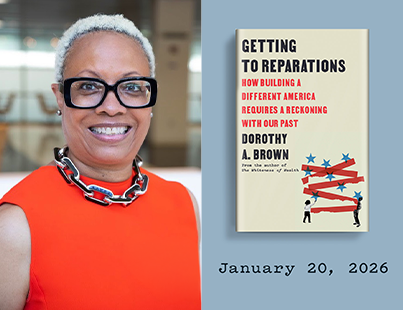
In her follow-up to The Whiteness of Wealth, which examines how the U.S. tax code widens the wealth gap between white and Black Americans, Georgetown law professor Dorothy A. Brown turns her attention to reparations.
Brown became a tax lawyer to get away from race. Growing up in the South Bronx, she saw how racism constrained the lives of her family and neighbors. Law school offered a contrast: tax law was about numbers, and the only color that seemed to matter was green.
One summer morning over coffee, an Emory colleague mentioned that the United States had paid reparations for Italians lynched in New Orleans. The comment raised a simple question: if that harm was acknowledged, why not the harms suffered by Black Americans? Getting to Reparations grew out of that inquiry.
Book Reviews
“Important reading for those who want to understand how inequality is built into the bedrock of American society, and what a more equitable future might look like.”—Dr. Earl Lewis, Noted social historian, award-winning author, and educational leader.
“Making good on the nation’s debt to Black Americans is imminently doable. Getting to Reparations is the perfect mix of bold vision and practical strategy.”—Tressie McMillan Cottom, MacArthur Fellow and author of Thick: And Other Essays
“The incredible thinker Dorothy Brown presents a pathway to reparations that is not only historically grounded but also legally rich in exposing the critical histories. A devastating and commanding read.”—Marcia Chatelain, Pulitzer Prize-winning author

A cogent argument for putting long-overdue dollars on the table to compensate for injuries past and present.

In her follow-up to The Whiteness of Wealth, Georgetown law professor Brown turns her attention to reparations.
Book Launch Events
Martha’s Vineyard Black Book Festival
Theme: Legacy, Empowerment, and Sustainability
August 15, 2026, 12:00 pm – 6:00pm EST
Books for sale | MVBBF Merchandise for sale | Book Signings | Appetizers & Refreshments


Dorothy A. Brown in Conversation with Errin Haines
Politics and Prose 5015 Conn Ave NW Washington, DC
January 22, 2026 7:00 pm EST
This event is free with first come, first serve seating.


Book Launch for Dorothy A. Brown
Enoch Pratt Library in Baltimore, Maryland
In Conversation with Sherrilyn Ifill
January 20, 2026 7:00pm to 8:00pm EST